What We Buy
This is the same list we hand to customers at the counter. If your coin is on it, bring it in. If it is not, please read the notes below before making the trip.
We do not buy modern errors or varieties, except the specific ones listed on this page.
Most coin shops, including ours, do not buy modern errors or varieties.
Before you come in
- Please call ahead. Our hours can change depending on staffing. Call (309) 797-5066 before making the drive.
- Do not clean your coins. Cleaning lowers a coin's value, sometimes by a lot. Bring it in exactly as you found it.
- Check the free PCGS CoinFacts app first. If your coin is not listed there, we most likely will not purchase it.
- Bring a valid photo ID. A government-issued photo ID is required when selling.
Helpful terms
- High grade / Brilliant Uncirculated
- Looks brand new, with no wear, scratches or dings.
- Mint mark
- A small letter showing where the coin was made: P for Philadelphia, D for Denver, S for San Francisco, O for New Orleans, CC for Carson City and W for West Point. Older Philadelphia coins have no mint mark.
- DDO / DDR
- Doubled Die Obverse (front) or Doubled Die Reverse (back). The lettering or date looks doubled. See Doubled dies explained below.
Silver coins
These are bought for their silver content, based on the silver price on the day you sell.
- 90% silver: dimes, quarters and half dollars dated 1964 and earlier.
- 40% silver: Kennedy half dollars dated 1965 to 1970.
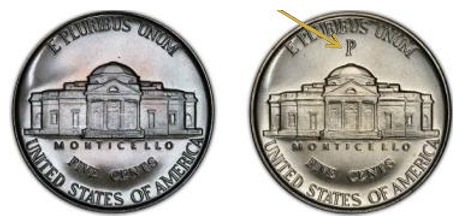
- 35% silver: "War" Jefferson nickels dated 1942 to 1945 with a large mint mark (P, D or S) above the building on the back. Some 1942 nickels are silver and some are not. Only the ones with the large mint mark are silver.
Coins we buy, by series
Wheat cents (1909 to 1958)
- 1909-S, 1909-S VDB, 1914-D, 1922 Plain (no mint mark), 1931-S and the 1955 Doubled Die
- Any 1909 to 1930 wheat cent in high grade (looks brand new)
Lincoln Memorial cents (1959 to 2008)
- 1969-S DDO, 1971 DDO, 1972 DDO, 1983 DDR, 1984 DDO and 1995 DDO
- Not buying: any other Lincoln Memorial cent errors or varieties.
Jefferson nickels (1938 to date)
- 1938 and 1939, all mint marks; the 1939 Doubled Die Reverse; 1950 and 1950-D
- For 1942 to 1945 silver "War" nickels, see Silver coins above.
Mercury dimes
- 1916-D and all 1921 dates
- Any 1916 to 1931 Mercury dime in high grade (looks brand new)
Washington quarters
- 1932-D and 1932-S, in any condition
- 1930s and 1940s quarters in Brilliant Uncirculated condition only (brand new, with no scratches or dings). Otherwise, they are bought at the current silver price.
- 2004 Wisconsin quarter with the "High Leaf" or "Low Leaf" error
- 2009 Washington, D.C. (Duke Ellington) Doubled Die
- 2019 and 2020 America the Beautiful quarters with the W (West Point) mint mark
Walking Liberty half dollars
- 1916, all mint marks; 1921, all mint marks; and 1938-D
Susan B. Anthony dollars
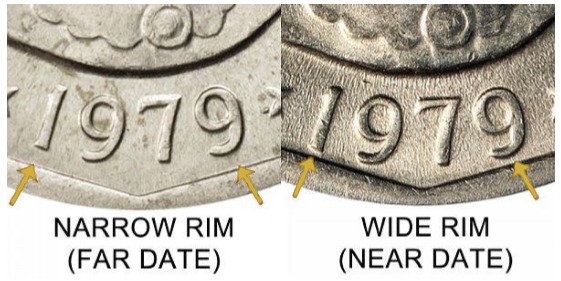
- 1979-P Wide Rim (Near Date)
- Not buying: all other Susan B. Anthony dollars are just a spendable dollar to us.
Native American (Sacagawea) dollars
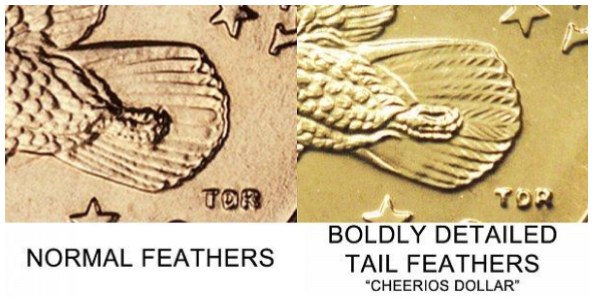
- 2000 "Cheerios" variety with the boldly detailed tail feathers
- Not buying: all other Native American dollars are just a spendable dollar to us.
Better-date Morgan dollars
- All dates with the CC (Carson City) mint mark
- 1886-S, 1888-S, 1889-S, 1893 all mint marks, 1894 all mint marks, 1895 all mint marks, 1899 (no mint mark), 1902-S, 1903-O and 1903-S
Better-date Peace dollars
- 1921, 1928 and 1934-S in high grade
Gold, bullion and currency
We also buy gold and silver bullion, U.S. gold coins and older U.S. paper money. Bullion is bought at the current market price. Call (309) 797-5066 to ask about a specific item.
Doubled dies explained
Every coin is struck by a pair of steel dies, one for each side. For most of the Mint's history, each die was made by pressing a master design, called a hub, into the die several times. If the die shifted even slightly between those impressions, the design was pressed in twice, a little out of line, and every coin struck by that die shows the same doubling.
That consistency is what makes a doubled die a collectible variety. In the 1990s the Mint changed to a single-impression process, which made new doubled dies much less common.
Real doubling or machine doubling?
Most coins brought to us as doubled dies are actually showing machine doubling, also called strike doubling. It happens when a die bounces during the strike and smears the edge of the design. It is very common and adds no value.
| True doubled die | Machine doubling | |
|---|---|---|
| Second image | Rounded and raised, with full detail | Flat and shelf-like, like a step cut into the letters |
| Where it shows | Across the date and lettering, in one consistent direction | Often on only one side of each letter |
| Fine details | Notches or split serifs where the two images meet | No notches; the extra edge is smooth and lower |
| Value | A premium, sometimes a large one | None |
A worn-out die can also give the design a fuzzy, ghosted look, and damage after the coin left the Mint can push metal into shapes that look doubled. Neither adds value.
The doubled dies we buy
- 1955 Doubled Die Obverse
- The most famous doubled die in American coinage, with dramatic doubling on the date, LIBERTY and IN GOD WE TRUST that is visible without magnification. It is also one of the most counterfeited coins in the hobby.
- 1969-S Doubled Die Obverse
- Extremely rare, with only a few dozen genuine examples known. Look for doubling on the date, LIBERTY and IN GOD WE TRUST on a cent with an S mint mark. Convincing fakes exist, so it needs expert authentication.
- 1971 and 1972 Doubled Die Obverse
- Philadelphia cents (no mint mark) with doubling on LIBERTY, IN GOD WE TRUST and the date. The 1972 is the stronger and better known of the two. Both years also have many cents with machine doubling, so compare carefully.
- 1983 Doubled Die Reverse
- Doubling on the back of the cent, clearest on ONE CENT and E PLURIBUS UNUM.
- 1984 Doubled Die Obverse (Doubled Ear)
- Instead of doubled lettering, Lincoln shows a second earlobe. The date and lettering look normal, which makes it easy to overlook.
- 1995 Doubled Die Obverse
- Doubling on LIBERTY, especially the letters BERTY, and on IN GOD WE TRUST. This is the one most likely to turn up in pocket change.
- 1939 Doubled Die Reverse nickel
- Strong doubling on MONTICELLO and FIVE CENTS on the back of the nickel.
- 2009 Washington, D.C. (Duke Ellington) quarter
- Doubling on the lettering of the reverse, which shows Duke Ellington at a piano.
To check your coin, use a 5x to 10x magnifier in bright light, look at the shape of the doubling, and compare it with a photo of a certified example. Then bring it in, and we will give you a straight answer.
Myths & facts
Videos and online listings spread a lot of misinformation about coins. These are the myths we hear most often at the counter.
Most coin shops, including ours, do not buy modern errors or varieties. The market for them is small, and most are worth little or nothing to a dealer. We buy only the specific varieties listed on this page.
Most doubled-looking coins show machine doubling, which is common and adds no value. See Doubled dies explained for how to tell the difference.
Genuine 1943 copper cents are extremely rare, which is why so many fakes exist. Most "copper 1943" cents are steel cents that have been copper-plated, or 1948 cents with the 8 altered to look like a 3. A genuine copper cent will not stick to a magnet. If yours sticks, it is steel.
For most of its history, the Philadelphia Mint did not put a mint mark on its coins. Lincoln cents from Philadelphia carry no mint mark at all, except in 2017. A missing mint mark usually just means the coin was made in Philadelphia.
Cleaning removes a coin's original surface and leaves fine scratches that cannot be undone. Cleaned coins sell for far less. Bring coins in exactly as you found them.
Anyone can list a coin at any price. An asking price is not a sale. What matters is what identical coins in the same condition have actually sold for.
Susan B. Anthony dollars, Sacagawea dollars and 1776-1976 Bicentennial quarters were made by the hundreds of millions or more. Apart from the specific varieties listed above, they are worth face value.
Dimes, quarters and half dollars dated 1964 and earlier are 90% silver. From 1965 on, dimes and quarters contain no silver. Kennedy half dollars from 1965 to 1970 are 40% silver. Cents were never made of silver.
Nickels are not silver either. They are made of nickel, which is why we call them a "nickel" instead of a five-cent piece. (Today's nickel is a blend of 75% copper and 25% nickel.) The only nickels that contain silver are the 1942 to 1945 "War" nickels with the large mint mark above the building, which are 35% silver.